COMSOL Blog

Modeling Acoustic Damping Processes

Acoustics | Posted on May 23rd, 2013 by

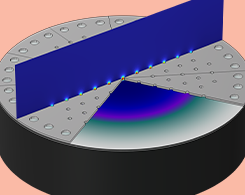
Mufflers are often located in exhaust systems or on heat, ventilation, and air conditioning (HVAC) systems, where their key functionality is to dampen the noise that is emitted from the system. A correct description of the acoustic damping (absorption and attenuation) processes in the muffler is important when designing and modeling these systems.

Read more on: Modeling Acoustic Damping Processes

Double Pendulum Simulation Tutorial

Mechanical | Posted on May 22nd, 2013 by

Dynamic simulation of a double pendulum system can easily be performed using the Multibody Dynamics Module available in COMSOL Multiphysics. This module enables the mechanical simulations of assemblies of flexible and rigid bodies, often coupled with other phenomena such as from heat, electrical, and others.

Read more on: Double Pendulum Simulation Tutorial

Meet the Program Committee for the COMSOL Conference Boston 2013

Conference | Posted on May 21st, 2013 by

Each year, a program committee is formed about six months prior to the conference day. This is always a sign to me that a brand new conference season has formally started. Working with the program committee has been one of the most inspiring and joyful parts of my involvement with the user’s conference, and I certainly feel the same way about the program committee for the COMSOL Conference Boston 2013.

Read more on: Meet the Program Committee for the COMSOL Conference Boston 2013

Equation-Based Modeling, a Custom Model of a Beating Heart

Multiphysics | Posted on May 20th, 2013 by

Equation-based modeling is one of the great strengths of COMSOL Multiphysics. The ability for you to easily access the equations describing the physics you are working with, and adding or manipulating them as you see fit, dramatically opens up the realm of possibilities that you can achieve through modeling and simulation. This is exemplified by the following custom model of a beating heart.

Read more on: Equation-Based Modeling, a Custom Model of a Beating Heart

Unexpected Uses of Magnetic Levitation

Electrical | Posted on May 17th, 2013 by

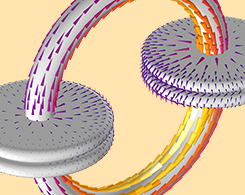
Magnetic levitation, or maglev, involves suspending materials with magnetic fields. When gravity, acceleration, and other forces weigh down on an object, they can all be counteracted by magnetic pressure. Some uses that may appear to go completely against nature can actually be explained by fundamental science.

Read more on: Unexpected Uses of Magnetic Levitation

Molecular Flow Module: Simulate Rarefied Gas Flows in Vacuum Systems

Fluid | Posted on May 16th, 2013 by

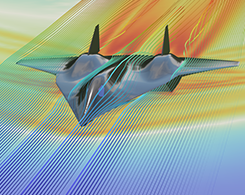
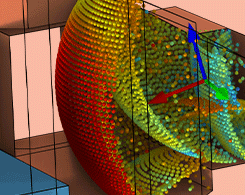
Vacuum technology has many important applications, from semiconductor device and MEMS fabrication, to vacuum coatings for corrosion protection, optical films, and metallization. The new Molecular Flow Module provides vacuum engineers with previously unavailable tools for modeling gas flows within vacuum systems.

Read more on: Molecular Flow Module: Simulate Rarefied Gas Flows in Vacuum Systems

Multiphysics Simulations inside the Autodesk® Inventor® User Interface

News | Posted on May 15th, 2013 by

Starting with the release of COMSOL Multiphysics® 4.3b you can work with multiphysics simulations right from the user interface of the Autodesk® Inventor® CAD system. Called the One Window interface, this functionality is available with LiveLink™ for Inventor®. The result of the work by our external interfaces and integrations development team, the One Window interface, is a completely new environment for simulations that are embedded in the Inventor® user interface. It contains the Model Builder, Settings, and all other views you are familiar with when modeling in the COMSOL Desktop™.

Read more on: Multiphysics Simulations inside the Autodesk® Inventor® User Interface

Asia-Pacific Engineering Contest with a Cause Hosted by IEEE

Events | Posted on May 14th, 2013 by

Are you an engineer under the age of 35, located somewhere in the Asia-Pacific region? If the answer is yes, you are eligible to enter the All IEEE-R10 Young Engineers’ Humanitarian Challenge 2013. The contest aims to engage young engineers to solve humanitarian problems using technology and entrepreneurial leadership. Many innovative project ideas have been submitted to this engineering contest in the past, and the winners have received funding to implement them. This year it could be your project that provides the solution to a humanitarian challenge.

Read more on: Asia-Pacific Engineering Contest with a Cause Hosted by IEEE

Top 5 Reasons to Attend the COMSOL Conference 2013

Conference | Posted on May 13th, 2013 by

If you are following this space, you have probably heard us talk about the upcoming users’ conference. Some of you might still be unsure of what this event is all about and what it can offer you, so we’ve put together a “Top 5″ list of reasons why you should attend the COMSOL Conference 2013. The conference has a wide and varied range of offerings. Unlike a lot of conferences out there, you don’t have to present a paper to attend ours (although we do still encourage it, of course). As a result, over the years, we have seen participants come to our conferences for a variety of needs.

So here they are, our Top 5 Reasons to Attend the COMSOL Conference 2013:

Read more on: Top 5 Reasons to Attend the COMSOL Conference 2013

Simulate Mechanical Systems with the Multibody Dynamics Module

Mechanical | Posted on May 10th, 2013 by

The new Multibody Dynamics Module provides engineers with an advanced set of tools to design and optimize mechanical systems to reduce product development costs. This module enables simulation of an assembly of flexible and rigid bodies, along with physical phenomena like structural, heat, electrical, and others. One of the key capabilities included in this module is an easier and faster way of building connections between different bodies using various types of predefined Joints.

The objective of multibody analysis is to find critical areas of a system to perform more detailed component-level structural analysis. Multibody analysis also gives insight into the system dynamics, forces experienced by segments of the structure, and stresses generated in flexible components leading to failure due to large deformation or fatigue.

Read more on: Simulate Mechanical Systems with the Multibody Dynamics Module